




Gold Buying Guide: How to Calculate the Real Cost of Gold Jewelry (Beyond the Price Tag)

Gold is more than just a metal in India; it is a cultural cornerstone, a symbol of prosperity, and a trusted financial hedge. Whether it is for a wedding, a festival, or a long-term investment, buying gold is a major financial decision. Yet, many consumers walk into a jewelry showroom, look at the price tag, and pay whatever is asked without understanding the underlying math.
If you have ever wondered why your final bill is significantly higher than the “gold rate” you saw on the news, you are not alone. To be a smart buyer, you must look beyond the surface. This guide will break down the complex calculation of gold jewelry, from making charges to GST, ensuring you get the best value for your hard-earned money.
The Foundation: Understanding Gold Purity (Karatage)
Before calculating the price, you must understand what you are buying. Gold is measured in Karats (K).
- 24K Gold: This is 99.9% pure gold. It is extremely soft and not suitable for intricate jewelry.
- 22K Gold: This is 91.6% pure gold (often marked as 916). The remaining 8.4% consists of other metals like copper, zinc, or silver, which provide the strength needed to hold gemstones and intricate designs.
The Lesson: Most jewelry is 22K. When you see a gold rate in the newspaper, it is usually for 24K. Ensure you are comparing the price of the correct purity grade.
2. The Anatomy of a Gold Bill
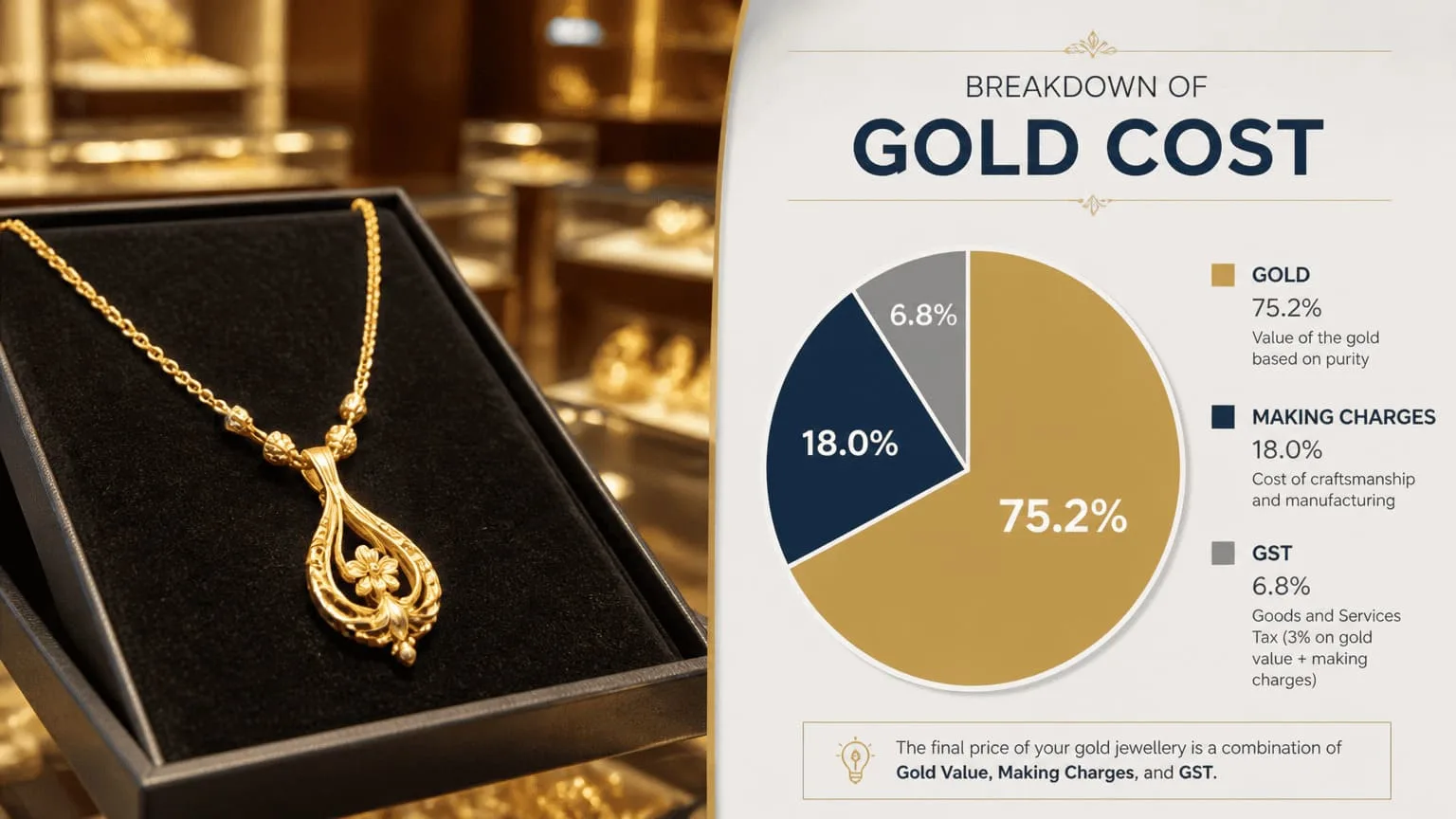
When you receive your invoice, it should be broken down into three distinct components. If a jeweler provides a lump-sum figure, ask for a detailed breakdown.
A. The Gold Value
This is the simplest part of the equation.
- Formula: (Weight of Jewelry in grams) × (Current Gold Rate per gram)
- Example: If you buy 10 grams of gold at ₹7,000 per gram, the base price is ₹70,000.
B. Making Charges (The Hidden Variable)
This is where most consumers lose money. Making charges (also known as wastage or labor charges) cover the cost of crafting the metal into a piece of jewelry.
- Why it varies: A simple gold chain will have lower making charges (3–8%), while a heavy, handcrafted bridal necklace with intricate filigree work can have making charges ranging from 15% to 25%.
- The Negotiation: Making charges are almost always negotiable. Never accept the first quote. If you are buying multiple items, ask for a “bulk discount” on the total making charges.
C. GST (The Mandatory Tax)
Since 2017, a flat 3% Goods and Services Tax (GST) is applied to the total value of the jewelry (Gold Price + Making Charges). This is a non-negotiable government tax. Always ensure the GST is calculated on the final amount after any discounts have been applied.
3. The “Wastage” Myth
Jewelers often use the term “wastage” to justify high making charges. They claim that during the melting and molding process, a certain percentage of gold is lost. While this is technically true for traditional handmade jewelry, modern machine-made jewelry involves very little wastage.
Pro Tip: If a jeweler is charging a high “wastage” percentage, ask if the item is machine-made. If it is, you have strong grounds to negotiate that percentage down.
4. The Importance of BIS Hallmarking
Never, under any circumstances, buy jewelry that is not BIS Hallmarked. A BIS Hallmark is your only guarantee of purity. A genuine hallmark will feature:
- The BIS Logo: A triangular mark.
- Purity Grade: e.g., 22K916 (indicating 22-karat gold).
- Six-Digit Alphanumeric Code (HUID): This is a unique ID for every piece of jewelry, allowing you to track the item’s history and authenticity online.
If a piece of jewelry lacks these marks, you are essentially buying “blind,” and you will likely face significant losses if you try to sell or exchange it later.
5. Strategic Tips for the Smart Buyer (Gold Buying Guide)
Check the Daily Rate
Gold prices fluctuate daily. Check the rate from at least two or three reputable sources (like the MCX or major national newspapers) before leaving your house.
Weighing the Jewelry
Always insist that the jewelry be weighed in your presence on a digital scale. Ensure the scale is calibrated and shows the weight in grams clearly. If the jewelry has stones or beads, ask for the “Net Weight” of the gold. You should not be paying gold prices for the weight of the stones.
Understand the Buyback Policy
What happens if you want to exchange this jewelry in five years? Reputed jewelers offer a “Buyback Policy.”
- Some offer 100% exchange value (minus making charges).
- Some deduct a percentage for “melting loss.”
Always get the buyback policy in writing on your invoice.
Avoid “Fixed Price” Traps
During festive seasons, jewelers often advertise “Zero Making Charges.” Be cautious. Often, they compensate for this by inflating the base price of the gold or by selling lower-quality gold. Always compare the final price of the item across different stores rather than focusing on a single “discount” offer
Conclusion: The Power of Knowledge
Buying gold is an emotional experience, but it should be a logical transaction. By understanding the breakdown of your bill—the gold rate, the negotiable making charges, and the mandatory GST—you transition from a passive buyer to an empowered investor.
Your Checklist for the Next Jewelry Store Visit:
- Check the daily 22K gold rate online.
- Ask for the “Net Weight” of the gold (excluding stones).
- Negotiate the making charges percentage.
- Verify the BIS Hallmark and HUID code.
- Request a detailed, itemized bill.
By following these steps, you ensure that your investment remains as pure and valuable as the gold itself.